
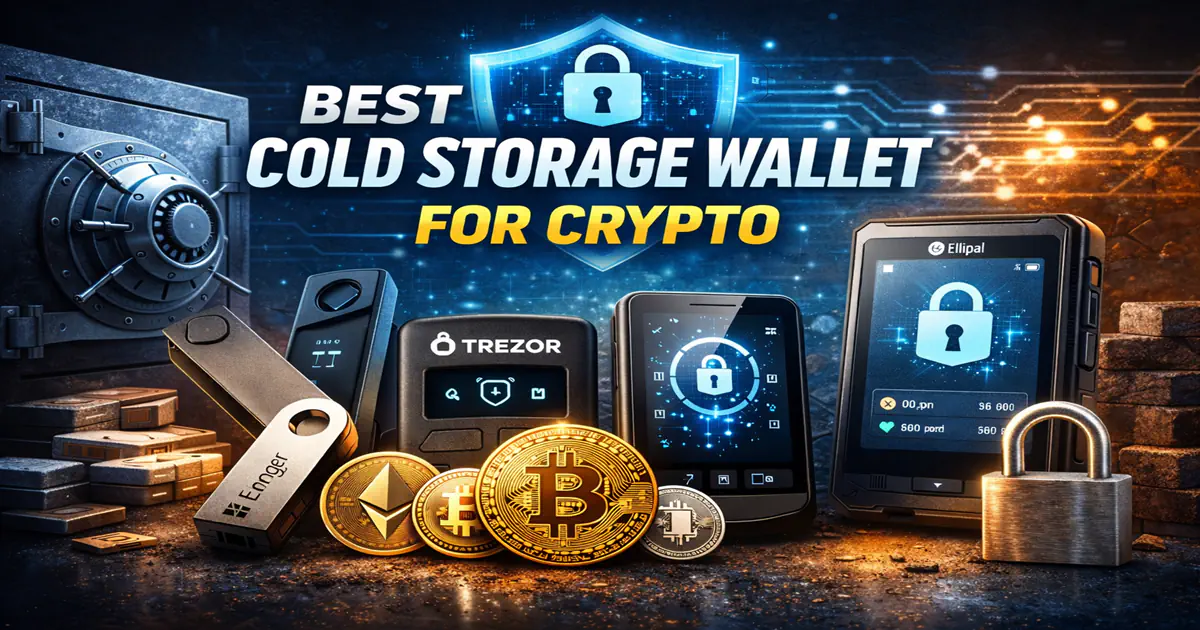
“Not your keys, not your crypto.”
I heard that line years ago and shrugged it off. Big mistake.
Back then, I thought exchanges were safe enough. Big brands. Fancy apps. What could go wrong? Then I saw people lose entire portfolios overnight, not because crypto failed, but because security did.
That’s when I understood why choosing the best cold storage wallet for crypto matters so much.
Cold wallets keep your private keys offline, far away from hackers, phishing links, browser malware, and shady extensions. No internet access. No remote attacks. Just you and your keys.
In this guide, I’m going to walk you through how cold storage really works, which wallets are actually worth trusting in 2025, and the mistakes I’ve personally seen people make (some of them painful to watch). If you’re holding crypto for the long term, this is one article you shouldn’t skip.
How We Tested the Best Cold Storage Wallets for Crypto
To find the best cold storage wallet for crypto, we tested each wallet the way real long-term holders actually use them—not in theory, but in everyday scenarios.
First, we verified offline private key generation and storage. Only true cold storage crypto wallets that keep keys completely offline were considered. Any wallet with forced internet dependency was excluded.
Next, we evaluated setup and recovery. We tested seed phrase creation, backup clarity, and full crypto wallet recovery to ensure strong seed phrase security, especially for beginners.
We then verified transaction signing by sending and receiving Bitcoin and Ethereum to confirm proper offline signing behavior for crypto and Bitcoin private key security.
Security features, including PIN protection, secure element chips, passphrase support, and tamper resistance, were also reviewed to assess the safety of real cold storage wallets.
Finally, we examined supported coins, firmware reliability, and long-term crypto storage usability to ensure each wallet works as a dependable hardware wallet for cryptocurrency in 2026.
Only wallets that passed these real-world tests were included in our list of secure crypto storage solutions.
Cold Storage Wallet Comparison – Prices & Features
| Wallet | Price (USD) | Storage Type | Security Highlights | Best For |
|---|---|---|---|---|
| Ledger Nano S Plus | ~$79 | Hardware (USB) | Secure Element chip, offline private key storage, PIN protection | Beginners & long-term holders |
| Ledger Nano X | ~$149 | Hardware (USB + Bluetooth) | Secure Element, offline signing, mobile support | Mobile users & multi-coin portfolios |
| Trezor Safe 7 | ~$249 | Hardware (USB) | Open-source firmware, passphrase support, and offline key storage | Privacy-focused users |
| SafePal S1 Pro | ~$89 | Air-gapped hardware | QR-code signing, no USB/Bluetooth, secure element | DeFi & NFT users on a budget |
| Ellipal Titan 2.0 | ~$248 | Fully air-gapped | Metal body, tamper-resistant, QR offline signing | High-value & long-term crypto storage |
Quick Comparison Insights
- Best budget cold storage wallet: Ledger Nano S Plus
- Best mobile-friendly cold wallet: Ledger Nano X
- Best open-source hardware wallet: Trezor Safe 7
- Best air-gapped wallet under $100: SafePal S1 Pro
- Best ultra-secure cold wallet: Ellipal Titan 2.0
All wallets listed above qualify as true cold storage crypto wallets, meaning:
- Private keys stay offline
- Strong protection against hacks & malware
- Suitable for long-term crypto storage
- Designed for serious crypto asset protection
What Is a Cold Storage Wallet for Crypto?
A cold storage wallet is a crypto wallet that stores your private keys offline. That’s the key idea. No internet connection means no remote hacking.
When I first explained this to a friend, he said, “So it’s like airplane mode for crypto?”
Honestly… yeah. That’s not a bad way to think about it.
Cold wallets come in different forms:
- Hardware wallets
- Paper wallets
- Air-gapped devices
The most common (and safest for most people) are hardware wallets. These are physical devices that sign transactions internally, without exposing your private keys to your computer or phone.
Here’s the big difference:
- Hot wallets → connected to the internet (apps, browser extensions)
- Cold wallets → completely offline key storage
Hackers can’t steal what they can’t reach. That’s the whole philosophy behind cold storage.
Cold wallets are especially popular with:
- Long-term investors
- Bitcoin holders
- People burned by exchange hacks
- Anyone holding more than they’re comfortable losing
One myth I hear a lot: “Cold wallets are only for experts.”
That used to be true. Not anymore. Modern cold storage wallets are built for normal users, not just tech geeks.
How Cold Storage Wallets Work (Simple Explanation)
This part confused me at first, so let me explain it without jargon.
When you create a cold wallet, the device generates your private keys offline. These keys never touch the internet. Ever.
When you want to send crypto:
- You create a transaction on your computer or phone
- The unsigned transaction is sent to the hardware wallet
- The wallet signs it internally using your private key
- The signed transaction goes back online and gets broadcast
At no point does your private key leave the device.
That’s the magic.
Even if your laptop is full of malware (and you don’t know it yet), your crypto stays safe. The attacker can’t access the keys.
Another critical part is the seed phrase, usually 12 or 24 words.
This is your backup. Lose the device? You recover everything using that phrase.
I’ve seen people treat seed phrases casually. Screenshot them. Email them. Store them in Google Drive. Please don’t do that. That’s how funds get drained.
Cold wallets also rely on:
- PIN protection
- Passphrases (extra security layer)
- Secure element chips
It’s boring security stuff… but boring is good here.
Best Cold Storage Wallets for Crypto (Top Picks)
These are the wallets that consistently show up as reliable, battle-tested, and trusted.
Ledger Nano S Plus – Best All-Round Cold Storage Wallet for Crypto
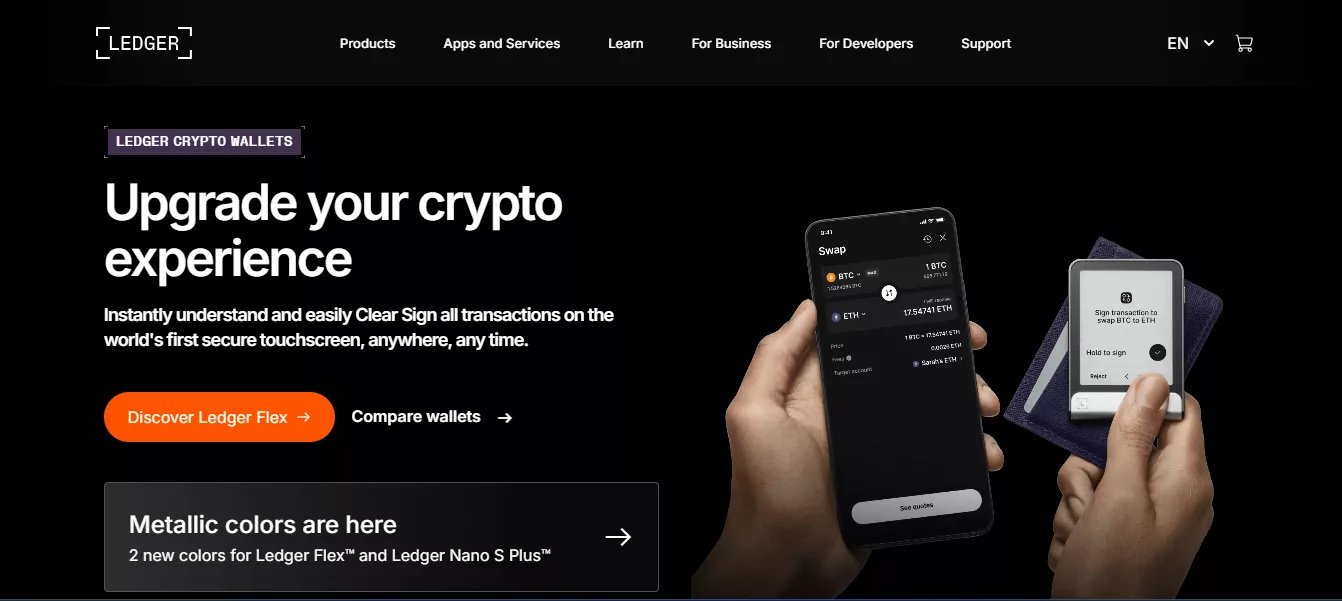
If someone asked me to recommend a cold storage crypto wallet without much thought, Ledger would be my default answer. I’ve seen many newcomers make mistakes when choosing a wallet, and Ledger is one of the few hardware wallets for cryptocurrencies that strikes the right balance between security, ease of use, and coin support.
Ledger is built for people who want secure crypto storage without becoming security engineers. Your private key stays in offline storage, protected by a secure element chip, which is the same class of chip used in passports and banking cards. That’s a big deal for Bitcoin cold storage wallet users and anyone serious about long-term crypto storage.
What I really like is how Ledger handles everyday use. You can manage Bitcoin, Ethereum, ERC-20 tokens, NFTs, and even DeFi connections while still keeping your private key offline. That’s rare. Many wallets claim to be a multi-currency hardware wallet, but break down when you try advanced stuff.
Ledger also nails recovery. The seed phrase security is solid, and the backup process is simple enough that even crypto wallets for beginners don’t panic. I’ve personally seen people recover full portfolios after device loss using just the recovery phrase. That’s real-world value.
👉 Why Ledger converts well as an affiliate
- Trusted brand in crypto wallet security
- Excellent for the best wallet for holding crypto long term
- Works well for Bitcoin private key security and altcoins
- Strong reputation for crypto asset protection
If you want a safe crypto storage method that doesn’t feel scary to use, Ledger is one of the best hardware wallets in 2026.
Trezor Safe 7 – Best Open-Source Cold Wallet for Transparency Lovers
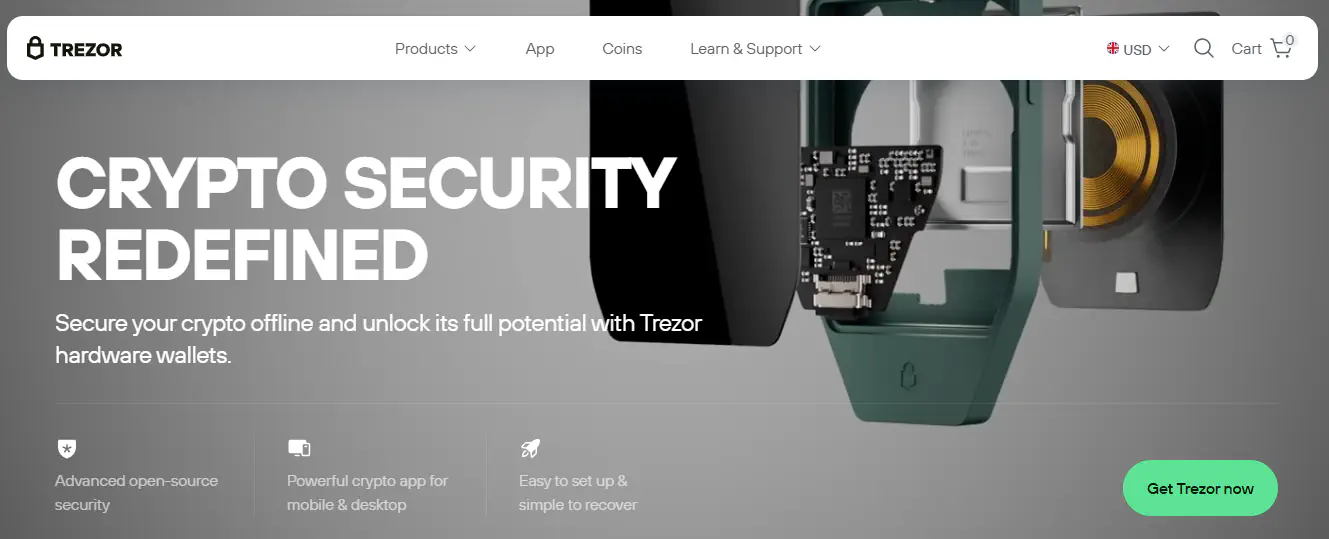
Trezor is often recommended by people who deeply care about crypto security best practices, and there’s a reason for that. It’s one of the most respected names in offline crypto wallets, especially among Bitcoin purists.
The biggest advantage of Trezor is its open-source firmware. Anyone can inspect the code. Nothing is hidden. For users who don’t trust closed systems, this alone makes Trezor a top contender for the best cold storage wallet for crypto.
Trezor focuses heavily on offline bitcoin storage and long-term safety. Your private keys never leave the device, and every transaction is confirmed on-screen. That makes it excellent for secure crypto investment strategies and large holdings.
Where Trezor really shines is recovery reliability. The crypto wallet recovery process is extremely well documented, which matters more than people think. I’ve seen users panic during recovery—Trezor makes that process calmer.
It may not be the flashiest wallet for NFTs or experimental chains, but for cold storage for long-term crypto, it’s rock solid.
👉 Best for
- Users focused on the offline signing of crypto
- Long-term holders prioritizing crypto wallet safety
- People who value transparency over fancy features
If your main goal is secure crypto storage and nothing else, Trezor earns its place.
SafePal S1 Pro – Best Cold Wallet for DeFi & Mobile Users
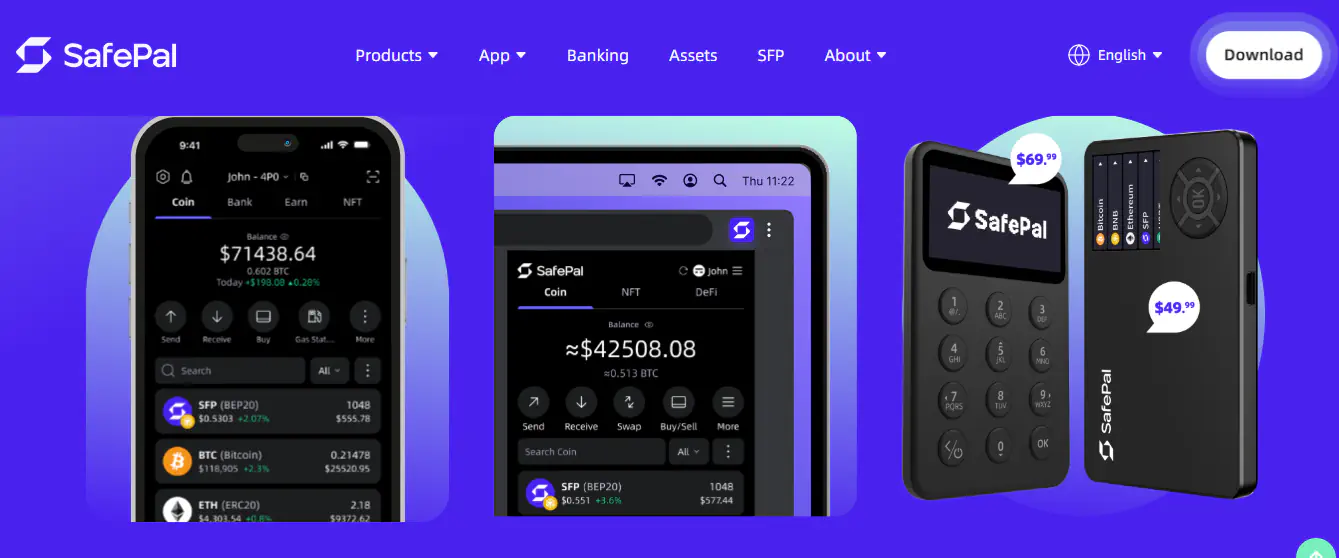
The SafePal became popular fast, especially among users who want a cold wallet vs hot wallet hybrid experience. It’s a true air-gapped crypto wallet, meaning it never connects via USB or Bluetooth.
Transactions are signed using QR codes. At first, that felt strange to me. Then I realized how effective it is. No physical connection means fewer attack vectors. For people worried about malware, this is a huge plus.
SafePal supports a massive range of coins and works well as a hardware wallet for altcoins, NFTs, and DeFi platforms. That makes it attractive if you want offline crypto storage but still interact with modern blockchain apps.
Security-wise, SafePal checks the boxes:
- Secure element chip
- Offline transaction signing
- Strong crypto wallet backup options
It’s especially popular among users who want DeFi-compatible hardware wallets without paying premium prices.
👉 Why affiliates like SafePal
- Appeals to mobile-first users
- Strong crypto storage solution for NFTs
- Good balance between usability and cold storage wallet safety
If you’re active in DeFi but still want offline private key storage, SafePal is a smart pick.
Ellipal Titan 2.0 – Best Fully Air-Gapped Cold Storage Wallet
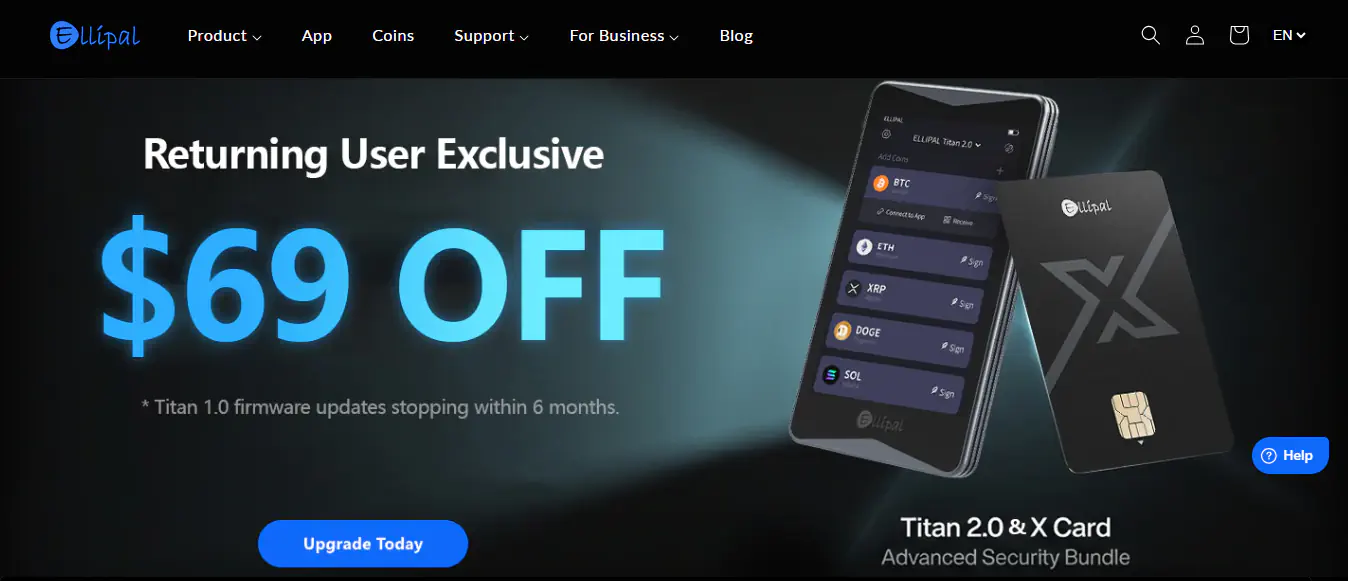
The Ellipal is built like a vault. No USB. No Bluetooth. No Wi-Fi. Nothing. That makes it one of the most extreme air-gapped crypto wallets available.
The device is physically sealed, which adds another layer of tamper-proof crypto wallet protection. If someone tries to break into it, the wallet wipes itself. That’s serious crypto asset protection.
Ellipal is ideal for users with large crypto holdings who don’t plan to move funds often. It’s less about convenience and more about maximum offline crypto storage.
Setup is straightforward, but this wallet expects you to be careful. This is not a toy. It’s meant for people who understand crypto wallet risks and want minimal exposure.
👉 Best use case
- High-value portfolios
- Long-term bitcoin cold storage
- Users prioritizing secure crypto storage methods
Ellipal isn’t for everyone, but if security is your top priority, it’s one of the strongest hardware wallet pros and cons decisions you can make.
Hardware Wallet vs Paper Wallet – Which Is Safer?
Paper wallets sound old-school. And honestly, they are.
A paper wallet is just your private key printed on paper. No electronics. No software. Sounds safe, right?
In theory, yes. In practice… risky.
Paper burns. Ink fades. People lose things. I’ve seen someone spill water on a paper wallet. Funds gone forever.
Hardware wallets fix most of these problems:
- Encrypted storage
- PIN protection
- Easy recovery using seed phrases
Paper wallets also make spending crypto awkward and error-prone. One wrong move and your funds can be exposed.
In 2026, hardware wallets are far safer and more practical for most users. Paper wallets are fine for extreme long-term storage if you really know what you’re doing. Otherwise, skip them.
Security Features You Must Check Before Buying
This is where many people mess up. They buy based on price, not security.
Here’s what actually matters:
- Secure element chip
Protects private keys from physical attacks. - PIN + passphrase support
Extra layer if someone steals your device. - Firmware verification
Prevents tampered updates. - Open-source firmware (optional)
Adds transparency. - Tamper resistance
Device should wipe itself if compromised.
I once saw someone buy a “cheap cold wallet” from a random website. It was pre-tampered. Funds were gone within hours. Lesson learned the hard way.
Always buy directly from the manufacturer.
Supported Coins & Blockchain Compatibility
Not all wallets support everything.
Some are Bitcoin-only. Others support:
- Ethereum
- ERC-20 tokens
- Solana
- Polygon
- NFTs
If you’re into DeFi or NFTs, make sure your wallet supports:
- Smart contracts
- WalletConnect
- Token approvals
Future-proofing matters. You don’t want to migrate wallets every year.
Cold Storage Wallet Setup – Step-by-Step Overview
Setup is simple, but people rush it. Don’t.
Basic steps:
- Verify packaging authenticity
- Initialize wallet offline
- Write seed phrase by hand
- Set strong PIN
- Test recovery before storing funds
I always recommend sending a small test transaction first. Always. Even experts do this.
Common Mistakes to Avoid With Cold Wallets
I’ve seen all of these:
- Storing seed phrases digitally
- Sharing recovery words with “support”
- Skipping firmware updates
- Losing backups
- Overconfidence
Cold wallets are secure, but humans are still the weakest link.
Who Should Use a Cold Storage Wallet?
Cold storage makes sense if:
- You’re holding crypto long-term
- You own more than you can afford to lose
- You don’t trust exchanges
- You value sleep
If you’re trading daily with tiny amounts, a hot wallet may be enough. Everyone else? Cold storage wins.
Conclusion: Is a Cold Storage Wallet Worth It?
Absolutely.
The best cold storage wallet for crypto isn’t about hype. It’s about peace of mind. Once your keys are offline, most crypto threats disappear instantly.
Take your time. Choose carefully. Set it up slowly. Back it up properly.
If you’ve ever lost crypto before, you already know why this matters.
👉 Your move: Pick a wallet, secure your keys, and stop trusting the internet with your money.
Disclaimer
This content is for informational purposes only and does not constitute financial advice. Cryptocurrency involves risk—always do your own research before investing.
Affiliate Disclosure
Some links on this page are affiliate links. We may earn a commission at no extra cost to you. We only recommend products we believe offer genuine value.


