Looking for the Top 10 Best Cryptocurrency Wallets in 2026? Whether you’re holding Bitcoin, Ethereum, or a basket of altcoins, choosing the right digital asset storage solution is essential.
A good crypto wallet does more than store coins—it protects your private keys, enables secure transactions, and offers support for everything from DeFi to NFTs. With options ranging from hardware wallets like Ledger and Trezor to mobile wallets like Trust Wallet, the right choice depends on your needs.
In this guide, we’ll compare hot wallets, cold storage, multi-signature options, and more—so you can store your crypto with confidence.
What Is a Cryptocurrency Wallet?
A cryptocurrency wallet is a tool that stores your private keys, allowing you to access and manage your digital assets on the blockchain. It doesn’t store the coins themselves—just the credentials needed to control them.
When I first dipped my toes into crypto, I thought a cryptocurrency wallet was like a PayPal account—simple, sleek, and easy. Oh boy, was I wrong! A cryptocurrency wallet is way more than a place to “store” coins.
Your crypto isn’t technically stored in the wallet at all—it lives on the blockchain. What the wallet actually holds are your private keys, which are like digital passwords that give you access to your digital assets.
Let me put it this way: if the blockchain is the bank, your wallet is the only key to your personal safety deposit box. Lose it? You’re locked out for good. That’s why private key management is such a big deal.
Crypto wallets mainly have two types:
- Hot Wallets: Connected to the internet (e.g., MetaMask, Trust Wallet). Convenient but less secure.
- Cold Wallets: Offline devices (e.g., Ledger Nano X, Trezor). More secure for long-term storage.
Custodial vs. Non-Custodial:
- Custodial Wallets: A third party (like an exchange) controls your private keys.
- Non-Custodial Wallets: You control the keys and the seed phrase. Greater security, more responsibility.
Key Terms:
- Seed Phrase: 12–24 words used to back up and recover your wallet.
- Multi-signature Wallet: Requires multiple approvals for transactions—adds extra protection.
- HD Wallet: Generates multiple addresses from a single seed phrase.
Another layer to understand is hierarchical deterministic (HD) wallets. These let you manage multiple crypto addresses from a single seed phrase—great for people like me who dabble in different coins and like to stay organized.
The best ones also support multi-signature wallets, which add extra protection by requiring more than one approval to send a transaction. Think of it like a digital two-key system for a nuclear launch—but way less dramatic.
Lastly, there are on-chain and off-chain wallets, especially relevant when using Layer 2 solutions or blockchain bridges. On-chain wallets interact directly with the blockchain (think MetaMask with Ethereum), while some off-chain solutions (like centralized cryptocurrency exchanges or Lightning Network channels) record transactions elsewhere to reduce fees and congestion.
Choosing the right wallet depends on your needs—daily use, investing, or long-term storage.
Key Factors to Consider When Choosing a Crypto Wallet
Before picking a crypto wallet, consider the following essential factors to ensure your digital assets stay secure and accessible:
- Security Features: Look for wallets with PIN protection, biometric authentication, and secure element chips (especially in hardware wallets).
- Supported Coins & Tokens: Make sure the wallet supports major assets like Bitcoin, Ethereum, ERC-20 tokens, and other multichain assets.
- User Experience: Choose a wallet with a clean interface, multi-device sync, and easy seed phrase backup.
- Custodial vs. Non-Custodial: Custodial wallets are easier to use but less secure. Non-custodial wallets give you full control of your private keys.
- Backup & Recovery Options: Check how the wallet handles recovery phrases, cloud backup, or multi-signature setups.
- Fees: Some wallets charge for in-app exchanges or have transaction fees. Review the cost structure before committing.
Top 10 Best Cryptocurrency Wallets of 2026
I’ve tested a ridiculous number of wallets over the years—some were fantastic, some? Not so much. I’ve lost access to funds (thanks, forgotten seed phrase), dealt with sketchy mobile apps, and even got hit with surprise transaction fees. But over time, I’ve narrowed it down to the best-of-the-best based on security, user experience, and actual long-term use.
Here’s my personal breakdown of the Top 10 Crypto Wallets in 2026:
1. Ledger Nano X (Best Overall Hardware Wallet)
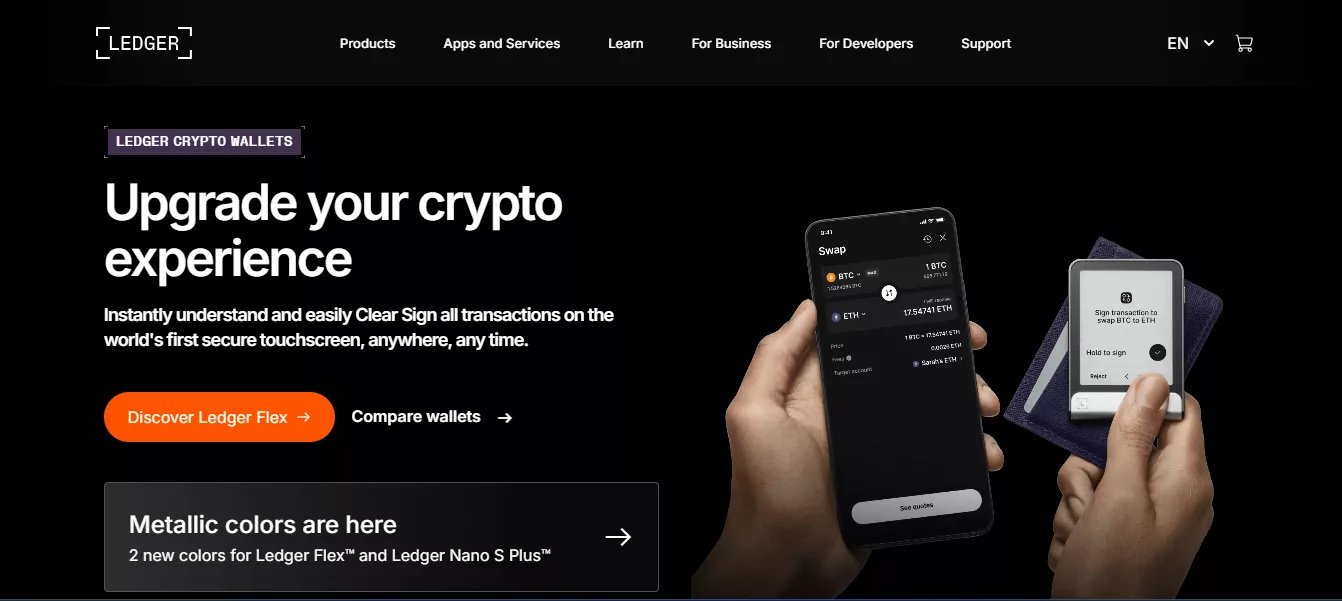
Ledger Nano X is the flagship hardware wallet from Ledger, a leading name in cryptocurrency security. Launched in 2019, it’s designed to offer secure, mobile-friendly cold storage for thousands of crypto assets. Unlike hot wallets, Ledger Nano X stores private keys offline using a secure element chip, making it extremely resistant to hacks and malware.
It connects via Bluetooth or USB and pairs with the Ledger Live app, which acts as your portfolio dashboard and supports staking, swapping, and installing wallet apps for multiple blockchains.
Supported blockchains and platforms:
Bitcoin (BTC), Ethereum (ETH), Solana (SOL), XRP, Polkadot (DOT), Binance Smart Chain (BSC), Avalanche (AVAX), Cardano (ADA), Stellar (XLM), Tezos (XTZ), Litecoin (LTC), and 5,500+ other coins and ERC-20 tokens.
Platforms:
- Mobile: iOS and Android (via Ledger Live + Bluetooth).
- Desktop: Windows, macOS, Linux (via USB and Ledger Live).
Google rating
4.7/5 (as of July 2025)
Pros:
- High-level security features with certified secure element.
- Supports a wide range of cryptocurrencies.
- Works seamlessly with Ledger Live for portfolio management.
- Bluetooth support for mobile use.
Cons:
- Initial setup may be complex for beginners.
- More expensive than software wallets (~$149).
- Requires physical access for most operations.
2. Trezor Model T (Most Secure, Open-Source)
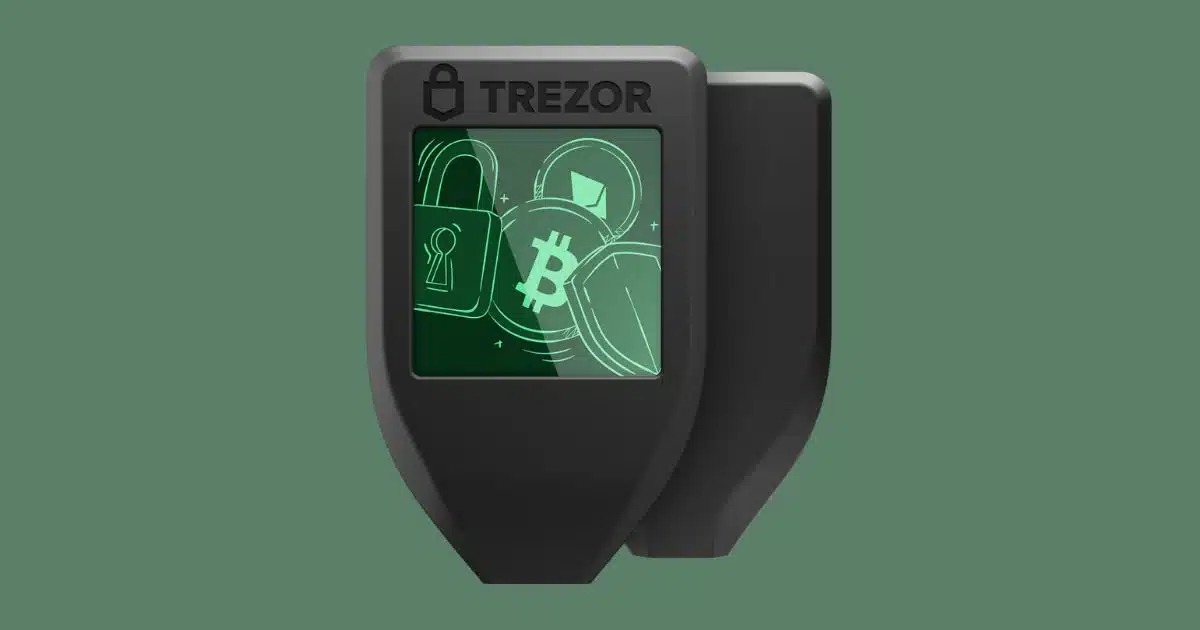
Trezor Model T is a premium hardware wallet developed by SatoshiLabs, designed for both security and ease of use. With a sleek, responsive touchscreen interface, this wallet lets you confirm every transaction directly on the device—your private keys never leave the device. It’s fully open-source, offering complete transparency and trust. Ideal for long-term holders, security enthusiasts, and anyone who values cold storage and digital independence.
It also features industry-leading backup and recovery options. Along with standard 12-word recovery seeds, it supports Shamir Backup (SLIP39)—a system that splits your recovery phrase into multiple shares for enhanced protection. Paired with the Trezor Suite app, you can securely send, receive, trade, stake, and track your portfolio all in one place.
Supported blockchains and platforms:
Bitcoin (BTC), Ethereum (ETH), Litecoin (LTC), Ripple (XRP), Binance Coin (BNB), ERC-20 tokens, Dogecoin (DOGE), Dash (DASH), Zcash (ZEC), Monero (via third-party integration), and 1,200+ additional digital assets.
Platforms:
- Desktop: Windows, macOS, Linux (via Trezor Suite).
- Browser: Chrome and Firefox (via Trezor Bridge).
Google rating
4.6/5 (as of July 2025)
Pros:
- Elegant design with a full-color touchscreen.
- Passphrase and PIN access with on-device confirmation.
- Advanced security with Shamir Backup support.
- Fully open-source firmware and transparent build.
- Easy access and portfolio tracking via Trezor Suite.
- Packaging security seals to ensure device integrity.
Cons:
- No Bluetooth or mobile app connectivity.
- Higher price (~$129) compared to entry-level wallets.
3. Exodus Crypto Wallet (Best for Beginners)
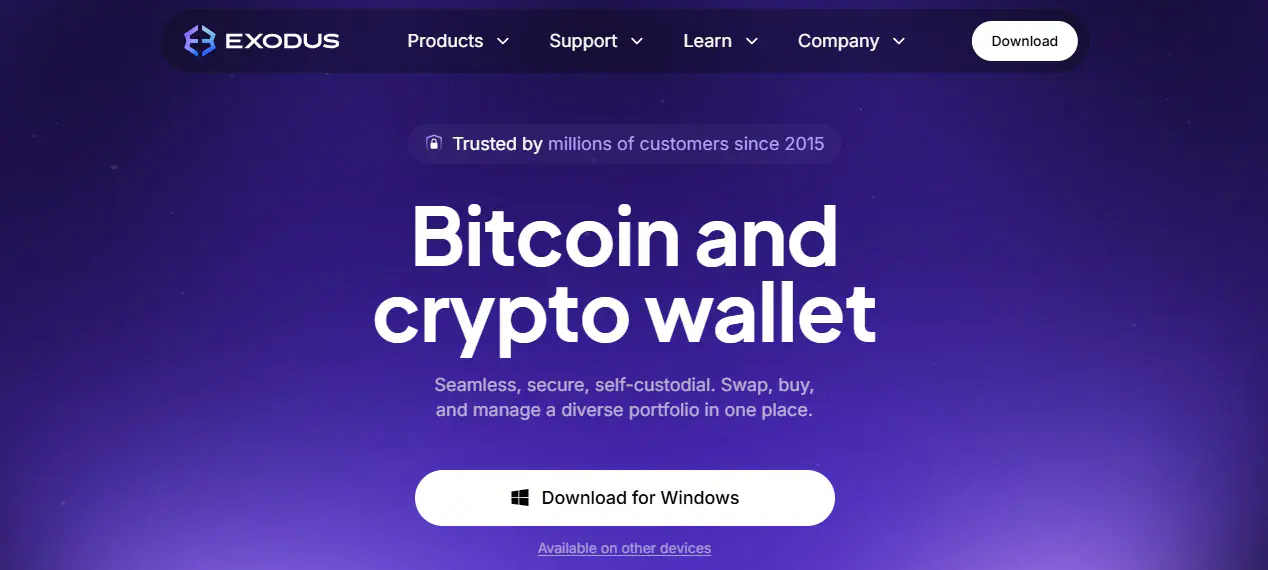
Exodus is a software wallet that launched in 2015, built to make crypto simple and beautiful. Known for its sleek design and user-friendly interface, Exodus is ideal for beginners who want quick access to a wide variety of digital assets. It also includes a built-in crypto exchange, staking support, and portfolio tracking, all from within the app. Security-wise, Exodus is a non-custodial wallet, meaning users retain full control over their private keys.
Supported blockchains and platforms:
Bitcoin (BTC), Ethereum (ETH), Solana (SOL), Cardano (ADA), Binance Coin (BNB), Avalanche (AVAX), Polkadot (DOT), Tezos (XTZ), and 250+ assets, including ERC-20 tokens and NFTs.
Platforms:
- Desktop: Windows, macOS, Linux.
- Mobile: iOS and Android.
Google rating
4.6/5 (as of July 2025)
Pros:
- Beautiful and easy-to-use interface.
- Integrated staking and exchange features.
- Supports a wide variety of coins and tokens.
- Good educational support and in-app guidance.
Cons:
- Not open-source.
- Doesn’t support two-factor authentication (2FA).
- Relies on device security—no hardware isolation.
4.Trust Crypto Wallet (Best Mobile Wallet)
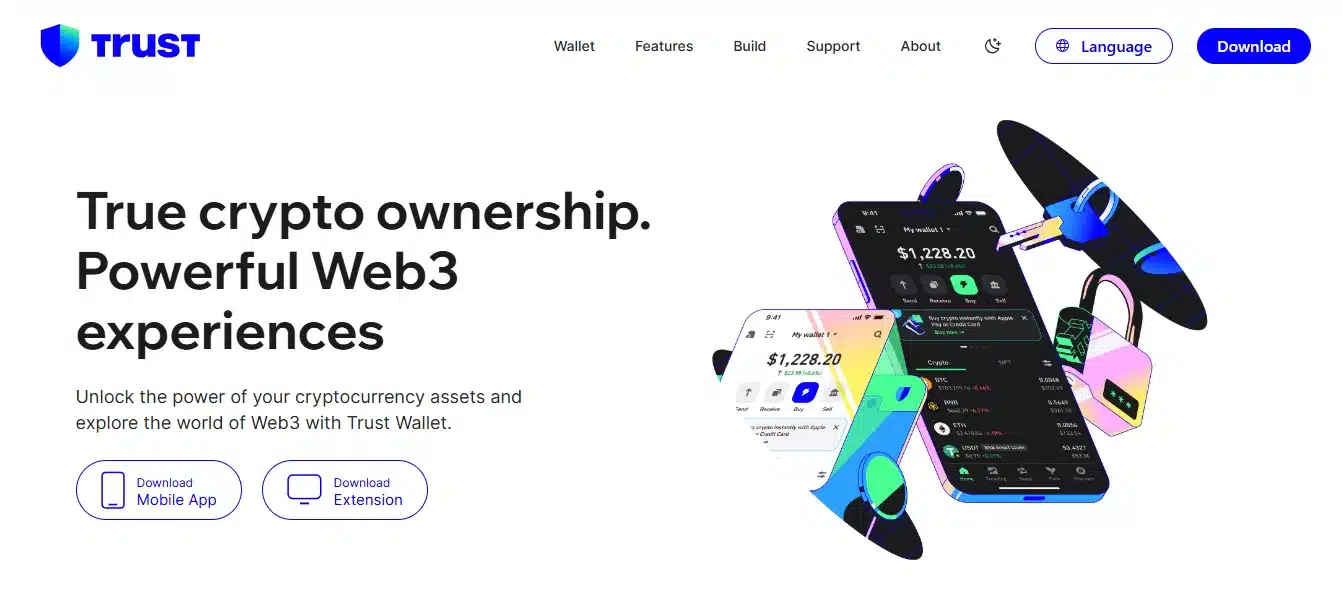
Trust Wallet is a widely used mobile cryptocurrency wallet, founded in 2017 by Viktor Radchenko and later acquired by Binance in 2018. Designed with a mobile-first approach, Trust Wallet gained traction for its sleek UI, multi-chain support, and ease of access to DeFi and NFT ecosystems. It supports over 70 blockchains, making it one of the most versatile wallets on the market.
With its built-in DApp browser, users can directly interact with decentralized applications and Web3 platforms without switching between tools. Trust Wallet is non-custodial, meaning users have full control of their private keys and seed phrase. Although there’s no desktop app, you can connect to desktop-based dApps using WalletConnect.
Supported blockchains and platforms:
Ethereum (ETH), Binance Smart Chain (BSC), Polygon (MATIC), Avalanche (AVAX), Solana (SOL), Fantom (FTM), Arbitrum, Optimism, and 70+ other blockchain networks.
Platforms:
- Mobile: iOS and Android (via mobile app).
- Desktop: Not available (can connect to desktop dApps via WalletConnect).
Google rating
4.4/5 (as of July 2025)
Pros:
- Supports 70+ blockchains and thousands of tokens.
- Built-in DApp browser for DeFi, NFTs, and staking.
- Simple interface, great for beginners.
- Easy integration with Binance ecosystem.
Cons:
- No native desktop application.
- Occasional bugs and transaction delays reported.
- Limited customer support options.
- Staking rewards have had reliability issues for some users.
5. Kraken wallet – a powerhouse for active traders
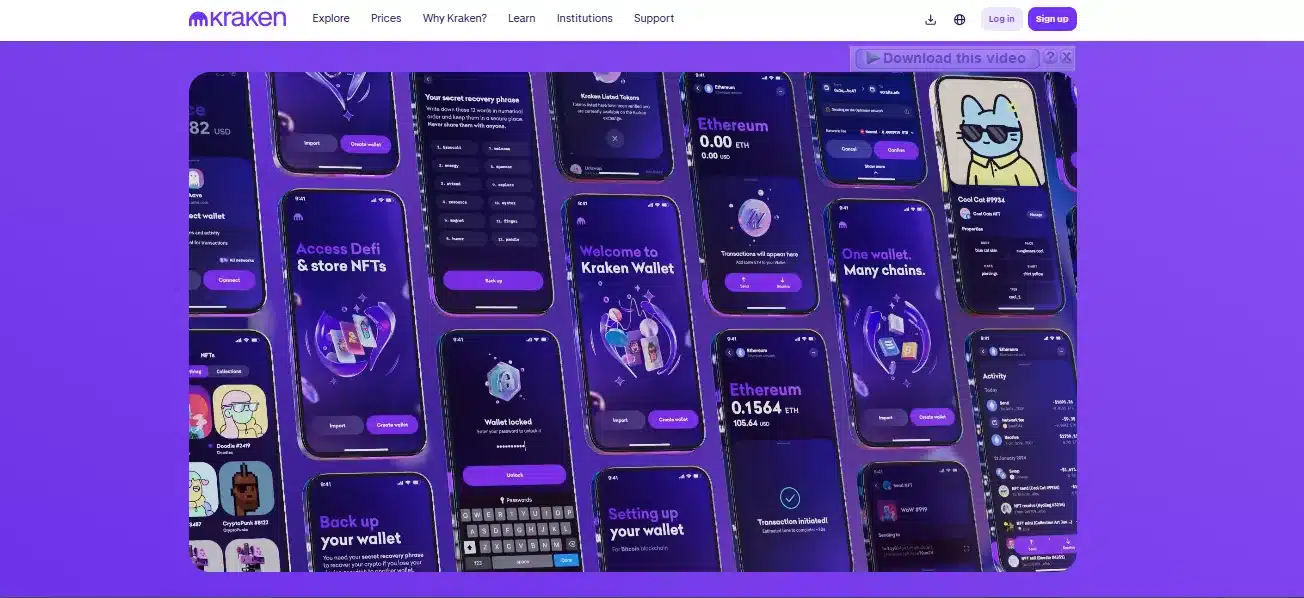
A Kraken Wallet is a newly launched self-custody wallet developed by the trusted Kraken exchange team. Built for users who want complete control over their crypto and NFT assets, Kraken Wallet emphasizes security, privacy, and ease of access to the decentralized web. With support for multiple blockchains and full DeFi integration, it offers a smooth experience for both beginners and advanced users.
The wallet features open-source software, biometric authentication, and modern encryption to protect your private keys. Users can manage NFT collections, connect to DeFi platforms, and explore multiple networks—all in one sleek, mobile app.
Supported blockchains and platforms:
Bitcoin (BTC), Ethereum (ETH), Polygon (MATIC), Solana (SOL), Dogecoin (DOGE), Arbitrum, Optimism, Base, and Blast. Supports NFTs across Ethereum, Solana, Polygon, Base, Optimism, and Arbitrum.
Platforms:
- Mobile: iOS and Android (via Kraken Wallet app).
- Desktop: Not currently available.
Google rating
4.5/5 (as of July 2025)
Pros:
- Backed by Kraken’s security and brand reputation.
- Multi-chain access from one app with no network switching hassles.
- NFT management across major blockchains.
- Built-in DeFi dashboard and dApp support.
- Privacy-first design with no IP or personal data tracking.
- User-friendly layout with biometric security features.
Cons:
- Relatively new product, still evolving.
- Lacks desktop application support.
- Smaller ecosystem compared to older wallets (as of now).
6. Coinomi Wallet (Privacy-Focused Wallet)
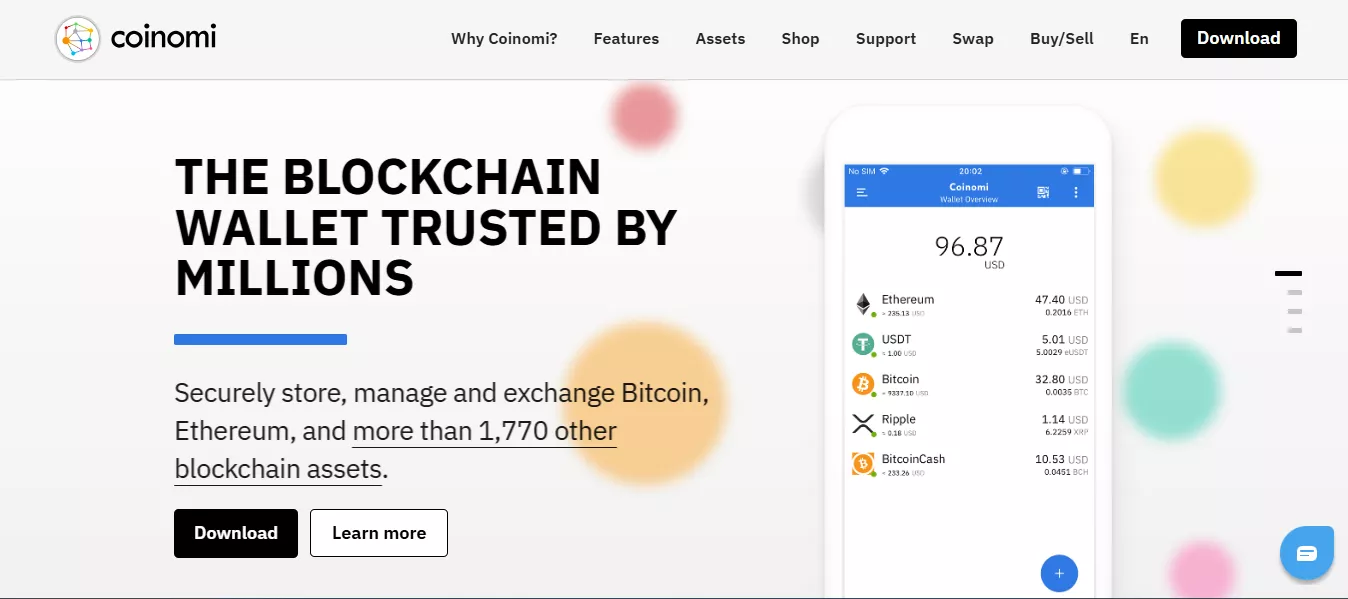
Coinomi is one of the oldest multi-asset crypto wallets, first launched in 2014. It’s known for its strong privacy policies, broad multi-chain support, and ease of use. Coinomi supports over 125 blockchains and thousands of tokens, making it a reliable choice for users who manage a diverse crypto portfolio.
The wallet is non-custodial, meaning you retain full control of your private keys. Coinomi also emphasizes privacy, with no KYC, no IP tracking, and no data sharing. Its intuitive interface and built-in exchange functionality make it beginner-friendly while still offering features that appeal to experienced users.
Supported blockchains and platforms:
Supports 125+ blockchains including Bitcoin, Ethereum, Litecoin, Dogecoin, Zcash, Dash, Monero, and more.
Also supports ERC-20, BEP-2, and other token standards.
Platforms:
- Mobile: iOS and Android
- Desktop: Windows, macOS, Linux
Google rating
4.3/5 (as of July 2025)
Pros:
- Long-established and reliable reputation
- Multi-platform support (mobile and desktop)
- No KYC or user data tracking
- Built-in crypto exchange features
- Supports an extremely wide range of coins and tokens
Cons:
- Not open-source (some users prefer open-source wallets for transparency)
- User interface is slightly outdated
- Customer support is limited
7. MetaMask (Best for Ethereum and EVM Chains)
MetaMask is a widely-used Ethereum wallet launched in 2016 by ConsenSys, a blockchain software firm focused on Ethereum infrastructure. Originally a browser extension, it was designed to simplify interactions with Ethereum-based decentralized applications (dApps). Over time, MetaMask has evolved into a robust crypto wallet supporting NFTs, DeFi platforms, and a wide array of EVM-compatible networks.
It remains a favorite among developers and everyday crypto users thanks to its user-friendly interface, flexible features, and seamless dApp integration.
Supported blockchains and platforms:
- Ethereum and EVM-compatible blockchains such as:
- Binance Smart Chain (BSC)
- Polygon (MATIC)
- Avalanche (AVAX)
- Fantom (FTM)
- Arbitrum
- Optimism
- Others using the Ethereum Virtual Machine
Platforms:
- Web browsers: Chrome, Firefox, Brave, Edge
- Mobile apps: iOS and Android
Google rating:
⭐ 4.5/5 (as of July 2025)
Pros:
- Easy connection with Ethereum-based dApps and DeFi tools
- Available as both a browser extension and a mobile app
- Supports ERC-20 tokens, NFTs, and custom tokens
- Compatible with popular Web3 networks
Cons:
- Primarily limited to EVM blockchains
- Security depends heavily on user-side practices (e.g., securing your seed phrase)
- No native support for Bitcoin or non-EVM chains
8. Phantom Wallet (Best for Solana Users)
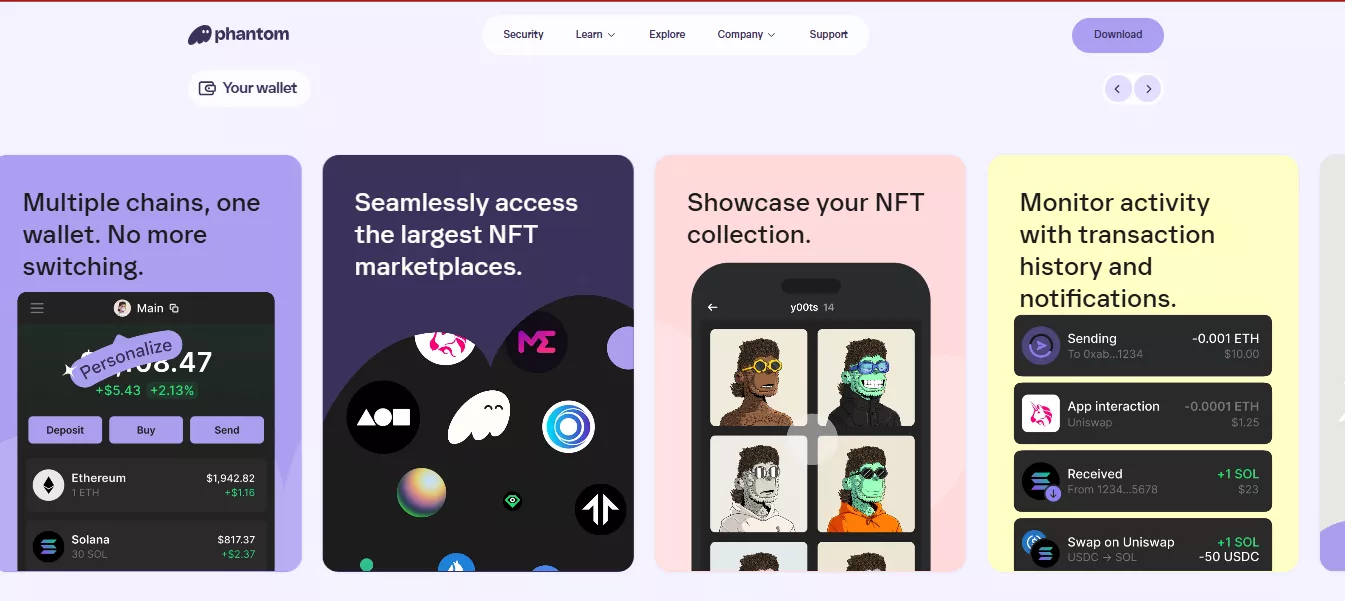
Phantom Wallet is a lightweight and intuitive self-custody wallet that offers a seamless way to manage digital assets across several networks. Originally launched with a focus on the Solana blockchain, it quickly became the go-to option for users engaging in NFTs, DeFi, and fast peer-to-peer transactions on Solana.
As of 2025, Phantom has expanded into a multi-chain wallet, now supporting Ethereum, Polygon, Sui, and Base, making it a versatile tool for users active on various Layer-1 and Layer-2 networks. The wallet offers native support for NFTs, staking, and dApp connectivity, all wrapped in a clean, beginner-friendly interface.
Supported blockchains:
Solana, Ethereum, Polygon, Base, Sui
Platforms:
- Desktop: Browser extensions for Chrome, Brave, Firefox, Edge
- Mobile: Apps for iOS and Android
Google rating:
⭐ 4.4/5 (as of July 2025)
Pros:
- Clean UI optimized for beginners
- Built-in NFT and staking features
- Non-custodial, with strong user control over assets
- Compatible with major Web3 dApps
Cons:
- The mobile app may experience performance issues
- Customer service options are somewhat limited
- Newer multi-chain features still developing
9. Casa Wallet (Best Multi-Signature Wallet)
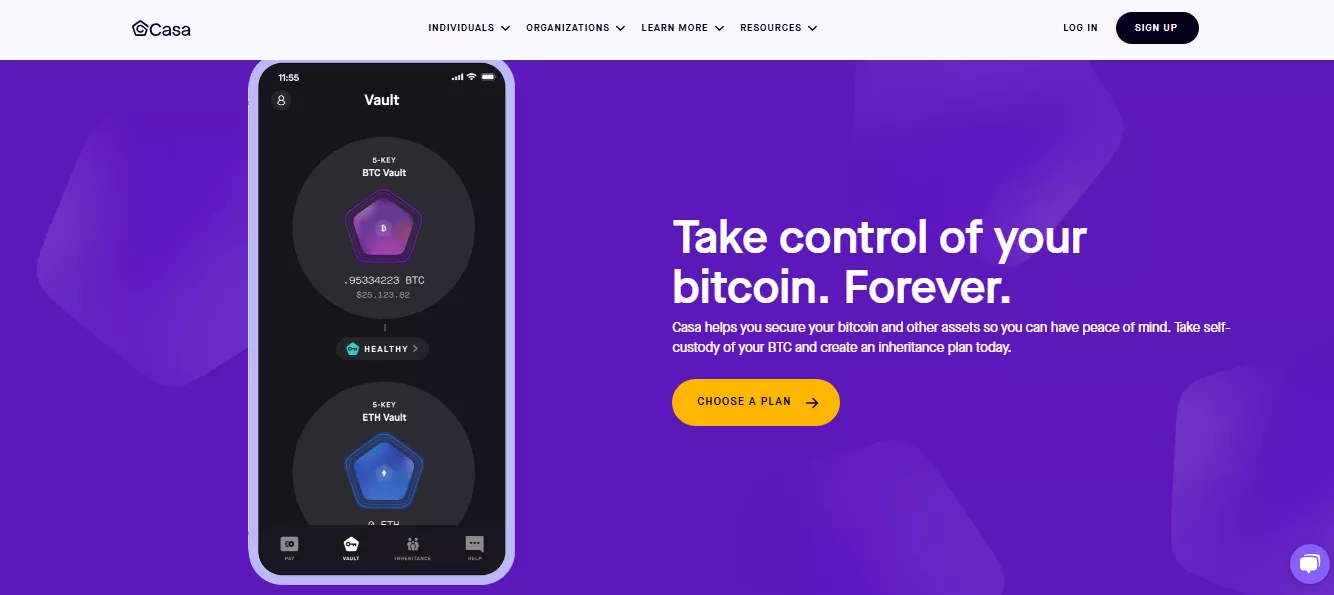
Casa Wallet is a security-first Bitcoin wallet tailored for users who prioritize private key protection and long-term digital asset storage. Unlike typical crypto wallets, Casa focuses exclusively on Bitcoin and uses a multi-signature setup, making it ideal for users looking for advanced self-custody solutions without the complexity of managing hardware wallets alone.
Casa’s core value lies in its key management service, which offers users control over their funds while providing backup and recovery support. With options ranging from simple mobile setups to multi-device and geographically distributed keys, Casa is often recommended for high-net-worth individuals or institutions securing large amounts of BTC.
Supported blockchains:
- Bitcoin only (BTC)
Platforms:
- Mobile: iOS and Android
- Web dashboard for account management (limited wallet access)
Google rating:
⭐ 4.6/5 (as of July 2025)
Pros:
- Premium-grade security with multi-signature protection
- Guided setup and recovery process
- Dedicated customer support for premium users
- Emphasis on privacy and user ownership
Cons:
- Limited to Bitcoin only
- Some advanced features are locked behind paid plans
- Not ideal for users who trade or hold altcoins
10. Zengo Wallet
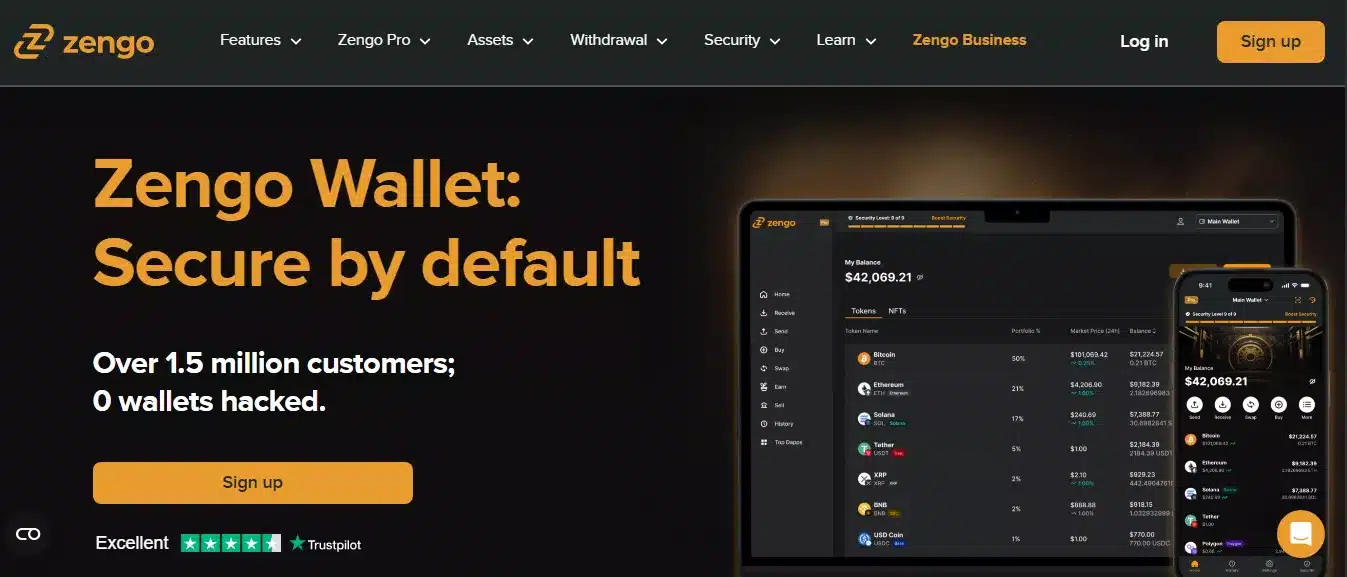
Zengo Wallet is a next-generation crypto wallet known for its keyless security architecture. Unlike traditional wallets that rely on seed phrases, Zengo uses multi-party computation (MPC) to eliminate the need for private key storage. This innovative approach drastically reduces the risk of asset loss due to seed phrase theft or user error, making it a favorite among beginners and security-conscious users.
Zengo offers biometric authentication, 24/7 in-app support, and integration with major blockchains and DeFi apps. It combines ease of use with advanced cryptography, giving users a simple yet highly secure way to manage their crypto portfolios without needing technical expertise.
Supported blockchains:
Bitcoin (BTC), Ethereum (ETH), Polygon (MATIC), Tezos (XTZ), Binance Coin (BNB), Dogecoin (DOGE), and other major Layer 1 and Layer 2 chains
Platforms:
- Mobile only: iOS and Android
Google rating:
⭐ 4.5/5 (as of July 2025)
Pros:
- No seed phrase required – advanced MPC security
- User-friendly onboarding and intuitive interface
- Biometric login and encrypted cloud backup
- Built-in access to DeFi, staking, and NFTs
Cons:
- Advanced features may not appeal to experienced developers
- Not open-source
- Mobile-only (no desktop version)
Each of these wallets brings something different to the table—whether it’s cold storage security, DeFi accessibility, or privacy features. I keep more than one in use depending on what I’m doing. For long-term holds, it’s hardware all the way. For quick trades or testing new chains, I lean on mobile and browser wallets.
👉 Just remember: always back up your seed phrase, triple-check links before logging in, and don’t store everything in one place.
How to Set Up Your Cryptocurrency Wallet
Setting up a cryptocurrency wallet is a simple process that varies slightly depending on the type of wallet (hardware, mobile, desktop, or browser-based). Here’s a general step-by-step guide:
- Choose Your Wallet Type
Decide between a software wallet (like MetaMask or Trust Wallet) for convenience, or a hardware wallet (like Trezor or Ledger) for maximum security. - Download or Purchase the Wallet
- For software wallets: download the official app or browser extension from a trusted source.
- For hardware wallets: purchase from the official website or authorized retailer.
- Install and Launch the Wallet
Follow the setup instructions. For mobile and desktop wallets, install the app. For browser extensions, add it to your browser. - Create a New Wallet
- Software wallets: generate a new wallet and securely back up your recovery phrase or seed phrase.
- Hardware wallets: follow the device’s on-screen prompts to initialize the wallet and write down your recovery words.
- Secure Your Wallet
Set a strong PIN, enable biometric security (if available), and never share your recovery phrase with anyone. - Add Funds or Connect to dApps
You can now send, receive, or buy crypto. Some wallets allow direct purchase via integrated exchanges or support Web3 dApp connections. - Test a Small Transaction First
Always test with a small amount when using a wallet for the first time to ensure everything is working properly.
Why Do You Need a Crypto Wallet?
A crypto wallet is more than just a digital tool—it’s the gateway to securely owning and interacting with your digital assets. Unlike keeping funds on an exchange, where the provider controls your private keys, a personal wallet gives you full self-custody. This means only you can authorize transactions, ensuring complete control and ownership over your cryptocurrencies.
Crypto wallets are essential for several key reasons:
- 🔐 Security & Ownership: Without a wallet, you’re entrusting your assets to third parties. A wallet ensures you have your private keys, meaning your crypto is truly yours.
- 🌐 Access to Web3 & dApps: Wallets like MetaMask or Trust Wallet enable direct interaction with decentralized applications—such as DeFi platforms, NFT marketplaces, and blockchain games.
- 🎨 NFT Management: Want to buy, store, or sell NFTs? Most wallets provide dedicated NFT support, especially on chains like Ethereum, Solana, and Polygon.
- 💸 Token Staking & Earning: Many wallets allow you to stake tokens or access yield farming opportunities, helping you grow your assets over time.
- 📤 Fast & Private Transactions: Send and receive crypto globally, 24/7, without the need for intermediaries or banks.
Whether you’re a trader, investor, or enthusiast, a crypto wallet is the foundation of digital asset management. It empowers you to operate securely, independently, and freely in the decentralized economy.
What to Look for in a Crypto Wallet
With hundreds of crypto wallets available, choosing the right one can feel overwhelming. The best wallet for you depends on your needs—whether it’s investing, trading, storing NFTs, or exploring DeFi. Here’s what to look for when picking the ideal crypto wallet:
✅ 1. Security Features
The most critical factor. Look for wallets that offer:
- Strong encryption
- PIN or biometric access
- Two-factor authentication (2FA)
- Backup and recovery options (seed phrases, recovery keys, or seedless tech like MPC)
- Open-source code (for transparency and community vetting)
✅ 2. Self-Custody vs. Custodial
Self-custody wallets give you full control of your private keys (e.g., MetaMask, Trezor, Zengo), while custodial wallets hold them on your behalf (like those on exchanges). For serious investors, non-custodial/self-custody is the gold standard.
✅ 3. Supported Blockchains & Assets
Make sure the wallet supports:
- The blockchains you plan to use (e.g., Ethereum, Bitcoin, Solana)
- The tokens or NFTs you want to store, trade, or stake
Multi-chain support is a plus if you’re using various ecosystems.
✅ 4. Ease of Use
Especially for beginners, a clean and intuitive interface is vital. Look for wallets with:
- Easy navigation
- Clear transaction signing
- In-app tutorials or help guides
✅ 5. Web3 and dApp Integration
If you’re into DeFi, gaming, or NFTs, pick a wallet that connects easily to Web3 apps using WalletConnect or native dApp browsers.
✅ 6. Reputation and Community Trust
Always research:
- User reviews
- Developer activity (especially for open-source wallets)
- History of hacks or breaches
✅ 7. Cross-Platform Availability
Some wallets are mobile-only, others are browser extensions, and some offer hardware + software options. Choose what fits your lifestyle.
Investing in Crypto Prudently
Cryptocurrency is exciting—but it’s also volatile. If you’re not careful, you can lose a lot just as quickly as you gain. Prudent investing means protecting your money while still participating in the upside of the market.
Here’s how to invest in crypto smartly:
🧠 1. Educate Before You Buy
Understand how crypto works before investing. Learn the basics of blockchain, how wallets function, and what makes a project valuable. Never buy coins based on hype alone.
💸 2. Only Invest What You Can Afford to Lose
Crypto markets can swing wildly. Avoid investing rent money or emergency savings. Start small, test the waters, and increase your position as your confidence and knowledge grow.
📊 3. Diversify Your Holdings
Don’t put all your funds into one coin. Spread your investments across various assets—e.g., Bitcoin (store of value), Ethereum (smart contracts), and other promising altcoins or stablecoins.
🔐 4. Use Secure Wallets and Avoid Keeping Funds on Exchanges
Keep long-term holdings in cold wallets or self-custody wallets. Exchanges are convenient but vulnerable to hacks and policy changes.
🧩 5. Watch for Scams and Rug Pulls
Verify smart contracts, avoid suspicious links, and be cautious with anonymous projects. If something sounds too good to be true, it probably is.
📉 6. Accept Volatility & Take Profits
Price drops are part of crypto. Stay calm and don’t panic-sell. Set goals, take profits when appropriate, and have a long-term mindset.
📚 7. Stay Informed
Follow reputable crypto news outlets, project blogs, and Twitter/X threads. Markets shift quickly—being informed helps you make better decisions.
Best Practices for Wallet Security
Tips and habits to keep your crypto assets safe 24/7
Crypto wallets put you in control—but with that control comes responsibility. Protecting your digital assets requires more than just choosing a secure wallet. Follow these best practices to safeguard your holdings:
1. Air-Gapped Backups
Store your seed phrase offline, away from any internet-connected device.
- Use steel backups like Cryptosteel or Billfodl to protect against fire, water, and physical damage.
- Keep backups in multiple secure locations (e.g., safe, bank deposit box).
2. Phishing & Scam Prevention
Scams are getting smarter—stay vigilant.
- Always double-check URLs when connecting your wallet to websites.
- Bookmark trusted dApps and exchanges.
- Regularly audit installed browser extensions; malicious add-ons can intercept wallet data.
3. Regular Firmware & App Updates
Developers frequently patch security vulnerabilities.
- Keep your wallet app (mobile or browser) and hardware firmware up to date.
- Enable auto-updates where possible, especially for mobile wallets.
4. Multi-Signature (Multi-Sig) Setups
Add an extra layer of protection by splitting control across devices or people.
- Useful for large holdings or business funds.
- A transaction requires approval from multiple keys—no single point of failure.
5. Emergency Recovery Plans
Plan ahead in case of device loss or emergency.
- Store recovery phrases securely.
- Use trusted contacts, encrypted backups, or smart contract-based recovery systems if supported.
- Document your process clearly for heirs or backups (but store that securely too).
Pro Tip: The strongest security often comes from a combination of habits—tech + discipline.
Always treat your seed phrase like your digital passport: if someone else gets it, they get your crypto.
Conclusion
Choosing the right cryptocurrency wallet is a crucial step in taking control of your digital assets. Whether you’re storing Bitcoin, exploring DeFi, collecting NFTs, or simply holding long-term, the wallets listed above offer a mix of security, usability, and multi-chain support to suit every type of user.
Remember, a wallet isn’t just a tool—it’s your gateway to digital ownership. Always prioritize security, stay updated with the latest wallet features, and invest responsibly.
From trusted software wallets like MetaMask and Trust Wallet to hardware solutions like Trezor and privacy-focused options like Zengo, the right choice depends on your goals, experience, and risk tolerance.
Take control. Stay secure. And as the crypto space evolves, so should your wallet strategy.
Related Post: