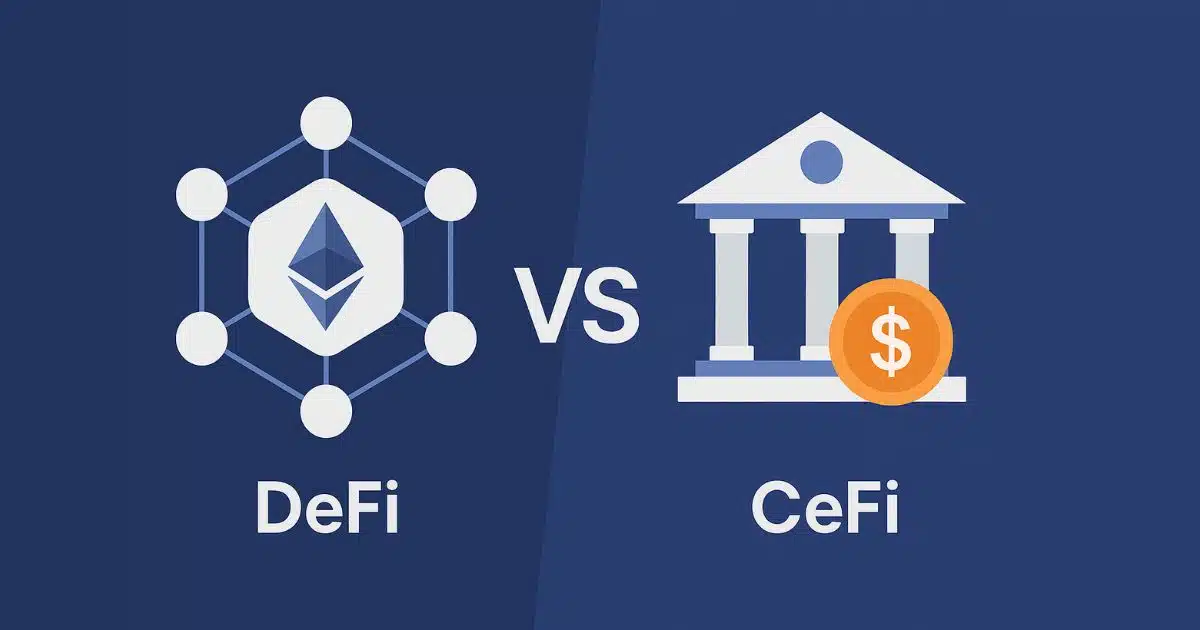
DeFi vs CeFi it’s the debate almost every crypto beginner runs into. And trust me, I’ve been down this rabbit hole myself. At first glance, it feels like you need a PhD just to figure out which side to pick.
Here’s the thing: for centuries, finance has been centralized. Banks, governments, and regulatory authorities ran the show. Then cryptocurrency showed up and flipped the script. Suddenly, people could trade, lend, and borrow without ever talking to a bank clerk or filling out KYC forms.
Over the last few years, I’ve dabbled in both centralized exchanges (CeFi) like Binance and Coinbase, and decentralized finance (DeFi) apps like Uniswap and MakerDAO. Each comes with perks and pain points. Some days, I love the ease of CeFi. Other days, I’m geeking out over smart contracts and yield farming in DeFi.
In this post, I’ll walk you through what CeFi and DeFi actually mean, their pros and cons, where they overlap, and ultimately help you decide which is better for you in 2026 Let’s dig in!
What is CeFi (Centralized Finance) in Crypto?
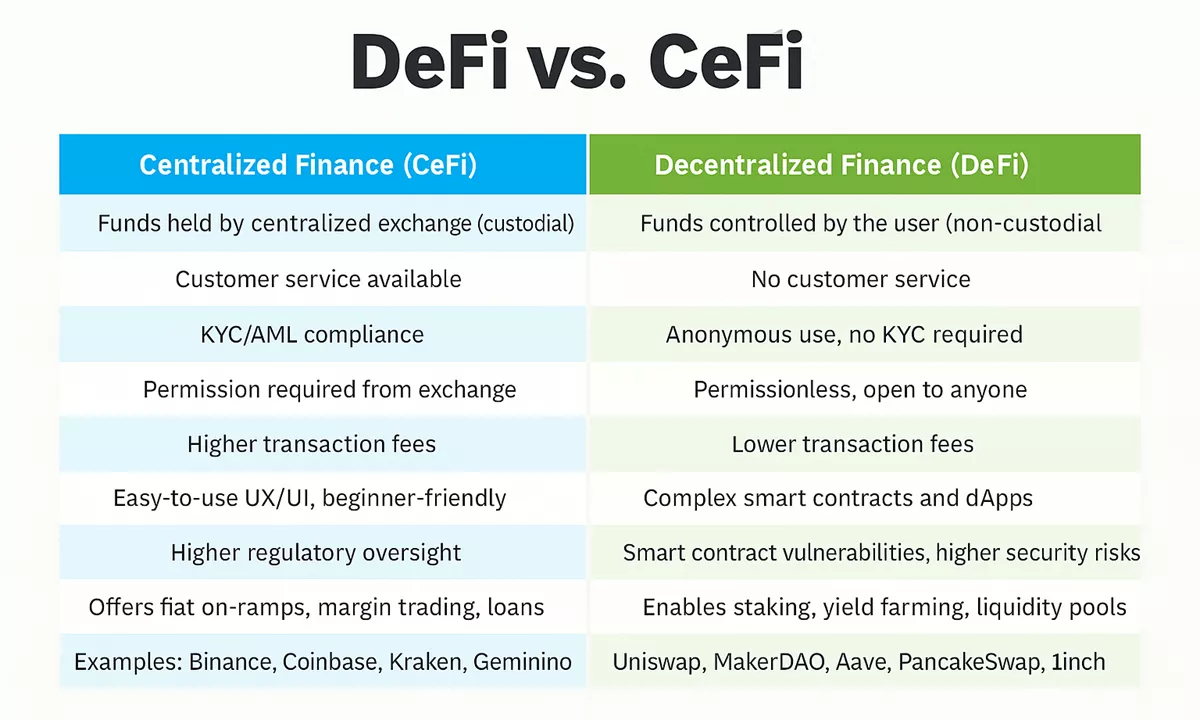
Centralized finance, or CeFi, mirrors traditional banking structures in the cryptocurrency world. In CeFi, users trade and invest through centralized exchanges (CEXs) such as Coinbase, Binance, Kraken, and Gemini.
Think of CeFi as the crypto version of traditional banking. You sign up for a centralized exchange (CEX) like Coinbase, go through KYC verification, and start trading. It feels familiar because someone else is holding custody of your assets and managing transactions behind the scenes.
When I first opened an account with Binance, I remember thinking, “This is basically like a stock brokerage, just with Bitcoin.” And it really is. Exchanges handle crypto custody, cross-chain swaps, and even margin trading. Some, like Nexo, offer loans and interest-bearing accounts.
The catch? You don’t actually own your private keys. If the exchange gets hacked or freezes withdrawals, your assets are at risk. We’ve seen this play out with shady platforms going bust.
Key takeaways:
- Centralized exchanges manage your funds.
- CeFi follows regulations and compliance (KYC, AML).
- Offers services like fiat conversion, cross-chain trading, and crypto loans.
- Popular examples: Binance, Kraken, Gemini, Coinbase, Nexo.
This system emphasizes ease of use and regulatory compliance, making CeFi the most common entry point for beginners in cryptocurrency trading.
Advantages of CeFi
I’ll be real — CeFi is where most beginners start, and for good reason.
- Customer support. When I couldn’t access my account once, Coinbase support actually helped me out. You won’t get that in DeFi.
- Fiat conversion. You can easily buy crypto with a debit card or bank transfer.
- Cross-chain services. CeFi makes swapping tokens across blockchains much simpler.
- Margin trading and loans. Some CEXs let you borrow against your assets.
- Passive income. Staking or earning interest on coins is straightforward.
For convenience, CeFi wins hands down.
Disadvantages of CeFi
But here’s the downside — and it’s big.
- Custody risk. “Not your keys, not your crypto.” If a platform collapses (think FTX), users lose everything.
- Regulatory risk. Governments can crack down anytime, freezing assets or shutting down services.
- Higher fees. Compared to DeFi, transaction and trading fees add up.
- Central point of failure. Hackers target exchanges because they’re huge honey pots of crypto.
Personally, I use CeFi mostly for on-ramps (buying with fiat). But I don’t leave large amounts sitting there.
What is DeFi (Decentralized Finance)?
Now flip the script. With DeFi, there’s no bank, no broker, no “middle guy.” You interact directly with smart contracts on the Ethereum blockchain or other networks like Polygon and Solana.
My first experience with DeFi was using Uniswap. I swapped ETH for a smaller altcoin, and it blew my mind how fast and direct it was. Nobody asked me for an ID, and no one held my funds. I was fully in control of my non-custodial wallet.
DeFi thrives on DEXs (decentralized exchanges), dApps (decentralized apps), and liquidity pools. You can stake tokens, lend crypto, and even earn from yield farming. The whole system is permissionless — anyone with a wallet can jump in.
But it’s not all sunshine. Fees can get unbelievable during network congestion (hello, Ethereum gas fees). And if you mess up a transaction, there’s no customer support line to call.
Key takeaways:
- You hold custody of your own funds.
- DeFi runs on smart contracts and dApps.
- Anonymous, permissionless, and transparent.
- Popular examples: Uniswap, MakerDAO, Aave, PancakeSwap, 1inch.
Advantages of DeFi
DeFi feels like freedom. Seriously.
- Self-custody. You own your private keys, so your funds are truly yours.
- Permissionless. No KYC, no gatekeepers — just a wallet and internet connection.
- Lower fees. Many DeFi protocols cut out middlemen, reducing costs.
- Transparency. Everything’s on-chain, visible to anyone.
- Innovation. dApps, liquidity mining, and decentralized governance are growing fast.
When I first staked coins in a liquidity pool, the passive income felt like magic. It wasn’t really magic, but it showed me how different DeFi is from CeFi.
Disadvantages of DeFi
That said, it’s not all rainbows.
- Complexity. If you’re not tech-savvy, setting up a non-custodial wallet and navigating dApps can be overwhelming.
- Security risks. Hackers love smart contracts. Billions have been lost to DeFi exploits.
- No safety net. Send funds to the wrong address? They’re gone forever.
- High volatility. Token prices swing wildly, and there’s no regulator to stabilize markets.
- Scams. With anonymous projects, rug pulls are common.
I’ve lost money chasing a “hot new protocol” that turned out to be a scam. Lesson learned.
Similarities Between DeFi and CeFi
Despite their differences, DeFi and CeFi aren’t total opposites.
- Both run on blockchain technology.
- Both let you trade, borrow, lend, and earn interest.
- Both face security risks like hacks.
- Both attract regulators’ attention.
- Both aim to grow cryptocurrency adoption worldwide.
In fact, some projects are blending both models into CeDeFi, where centralized exchanges integrate DeFi services.
DeFi vs. CeFi: Which is Better in 2026?
So… which should you use? Honestly, it depends.
- If you’re new, CeFi is easier. You get customer support, fiat on-ramps, and less hassle.
- If you’re experienced, DeFi offers control, transparency, and better earning opportunities.
- If you’re cautious, you might use a hybrid strategy — buy crypto on CeFi, then move it to DeFi for lending or staking.
Looking ahead, I think we’ll see more CeDeFi models emerge, blending regulation with decentralized innovation.
Conclusion: Choosing Between DeFi and CeFi
At the end of the day, DeFi vs CeFi isn’t about one being “right” and the other “wrong.” It’s about what fits your needs.
CeFi is convenient, user-friendly, and safe for beginners. DeFi gives you freedom, self-custody, and innovative tools, but it demands more responsibility.
My advice? Start small. Learn both. Don’t put in more than you can afford to lose, and always double-check wallet addresses before sending funds.
So, what about you — are you Team CeFi, Team DeFi, or do you mix both like I do? Drop your thoughts below.
FAQs on DeFi vs CeFi
Is DeFi safer than CeFi?
Not always. DeFi offers full custody of assets and transparency, but smart contract vulnerabilities and scams create risks. CeFi provides customer support and regulatory oversight, but centralized exchanges can be hacked or face insolvency.
Which is better: DeFi or CeFi?
It depends on the user’s goals. CeFi is better for beginners due to ease of use, fiat conversion, and customer service. DeFi is better for advanced users who want autonomy, lower fees, and access to innovative protocols.
What are examples of CeFi platforms?
Popular CeFi platforms include Binance, Coinbase, Gemini, Kraken, and Nexo. These exchanges provide custody, trading, and lending services.
What are examples of DeFi platforms?
Examples of DeFi platforms include Uniswap, Aave, PancakeSwap, MakerDAO, and 1inch Network. These operate through smart contracts and allow users to control their own funds.
Can CeFi and DeFi be used together?
Yes. Many investors buy cryptocurrency through CeFi exchanges and then transfer funds to DeFi protocols for staking, lending, or yield farming. This hybrid approach combines convenience with self-custody.
What is CeDeFi?
CeDeFi, or centralized decentralized finance, is a hybrid model that merges CeFi’s regulatory framework with DeFi’s transparency and innovation. It offers users the security of central oversight while allowing access to decentralized protocols.
Will CeFi or DeFi dominate in 2026?
Neither will dominate completely. CeFi will remain strong due to regulation and beginner-friendly services, while DeFi will expand through innovation, permissionless access, and new applications. A blended CeDeFi model is expected to grow.